Practical grocery planning

Make Grocery Planning Feel More Manageable

GroceryPod publishes practical strategies for planning shopping trips, comparing costs, using food efficiently, and building repeatable household routines. Our guides are written for ordinary kitchens and ordinary weeks — the ones with a changed schedule, a half-used bag of carrots, and a list written five minutes before leaving.

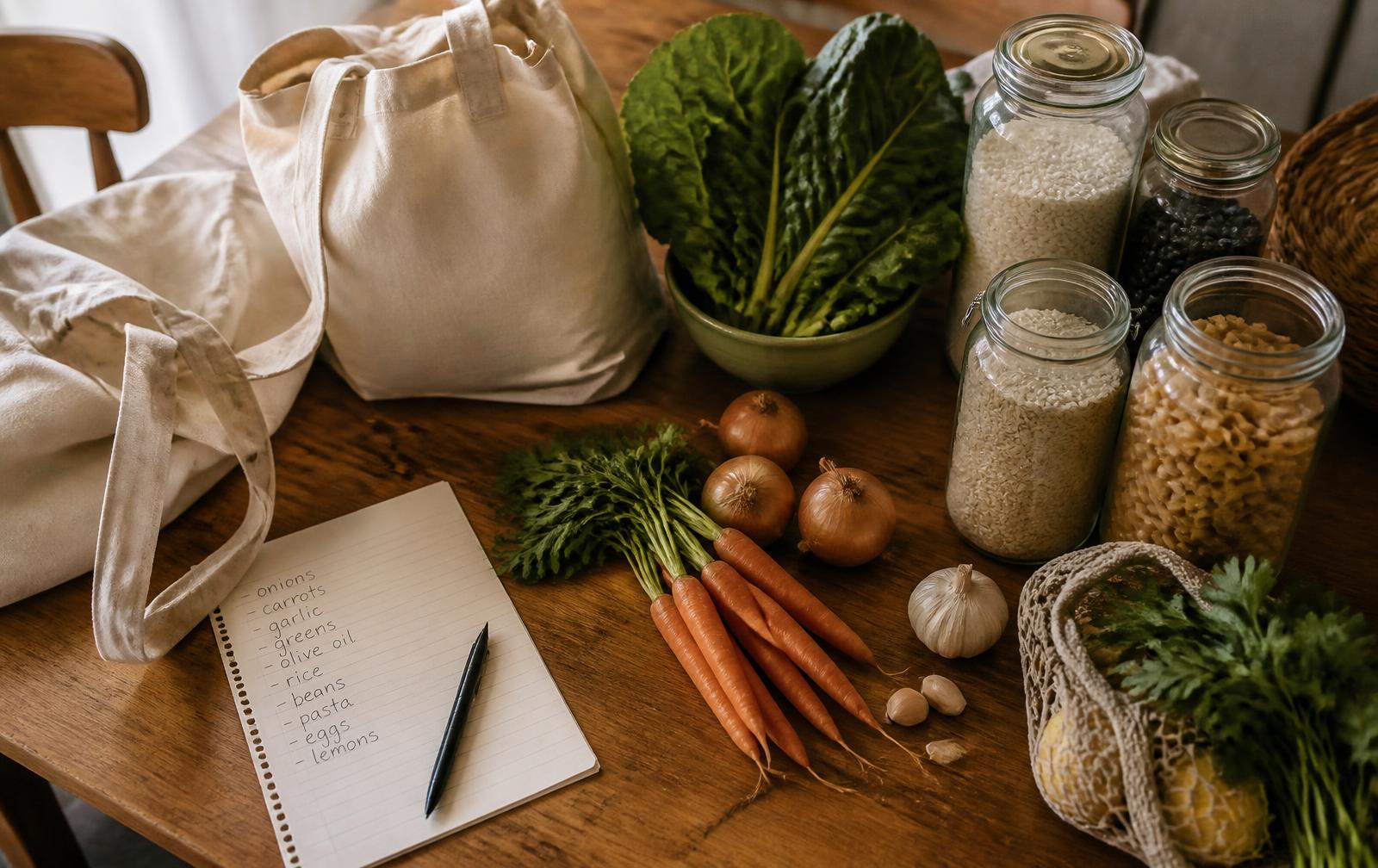
Overhead view of a kitchen table with a handwritten grocery list, carrots, onions, garlic, leafy greens, jars of rice, beans and pasta, and canvas reusable bags
All guides

Start with what you already have

A grocery list built without looking in the kitchen usually duplicates something. Before writing anything down, spend five minutes on three places, in this order:

  • Refrigerator. Note what needs to be used within about three days — opened dairy, cooked leftovers, herbs, salad greens. These become the first meals of the week rather than the last.
  • Freezer. Look for the proteins and vegetables that have quietly moved to the back. One freezer item per week is a reasonable habit and keeps the contents rotating.
  • Pantry. Check the staples you build meals around — rice, pasta, dried or canned beans, canned tomatoes, oil, stock. Write down only what is actually low, not what feels low.

Two useful outputs come from this: a short "use first" list posted where you will see it, and a shopping list that fills real gaps. Most weeks the list gets shorter.

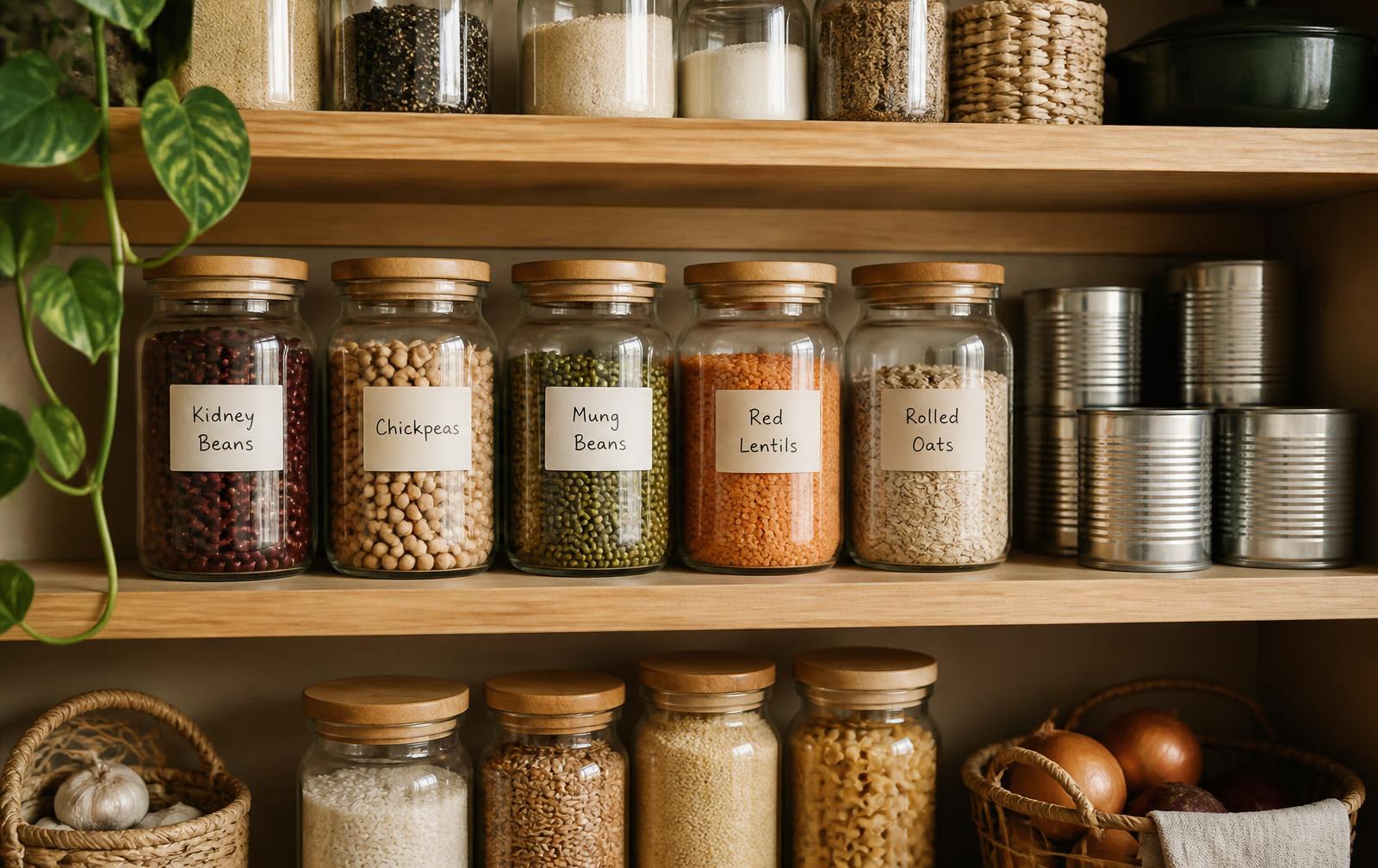
Wooden pantry shelves with labeled glass jars of kidney beans, chickpeas, mung beans, red lentils and rolled oats beside stacked plain cans
An inventory you can see at a glance is easier to shop around than one you have to remember.

Understanding unit price

A unit price is the cost of one standard measure of a product — per ounce, per pound, per 100 sheets, per fluid ounce. It lets you compare packages that are not the same size. Many shelf tags print it in small type near the total price, and the arithmetic is simple when they don't: divide the package price by the number of units in the package.

The comparison only holds when both tags use the same unit. A tag reading "per quart" and one reading "per fluid ounce" are not comparable until you convert one of them.

A realistic example

Say a 16-ounce bag of rolled oats is priced at $3.20 and a 42-ounce container of the same style of oats is $6.30.

  • 16 oz bag: $3.20 ÷ 16 = $0.20 per ounce
  • 42 oz container: $6.30 ÷ 42 = $0.15 per ounce

The larger container costs less per ounce. That is only the better buy if your household will realistically finish 42 ounces of oats while they are still good, and if you have shelf space for the container. If you eat oatmeal twice a month, the cheaper unit price attaches to food that may end up discarded — in which case the effective cost per ounce eaten is higher than the tag suggests.

Unit price is a comparison tool, not an instruction. Prices, package sizes, and availability vary by store and change over time, so treat the numbers above as an illustration of the method rather than a quote.

Read the full unit-price guide
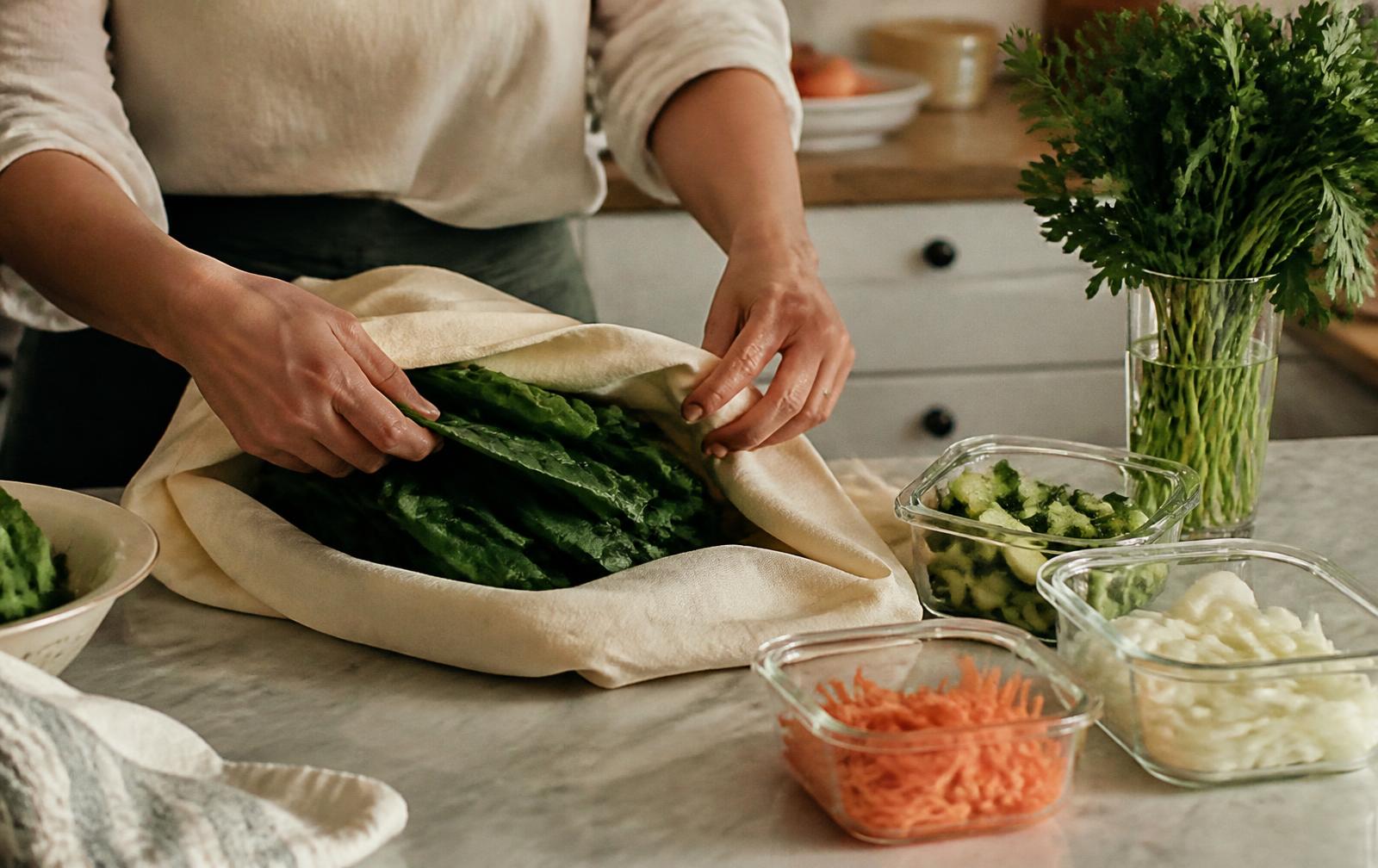
Hands wrapping leafy greens in a clean cloth next to glass containers of chopped vegetables and parsley standing in a glass of water

Storage habits that keep food usable

Food is usually wasted for undramatic reasons: it was stored somewhere it dried out, or it was stored somewhere nobody looked. Two habits address most of it.

  • Do the ten-minute unpack. When groceries come home, wrap greens loosely in a dry cloth or towel, stand herbs in a little water, move anything already open to the front, and put dated leftovers at eye level.
  • Keep one shelf as the "use first" shelf. A single, consistent place for items on a short clock removes the guesswork about what to cook.

Storage temperatures and safe-handling times are worth checking against an authoritative source rather than habit; FoodSafety.gov publishes cold-storage charts for that purpose.

Read the food-storage guide

Public resources worth bookmarking

These are free public resources maintained by U.S. federal agencies. GroceryPod is not affiliated with them, and links are provided for convenience only.

  • USDA MyPlate

    General nutrition guidance, portion basics, and free budget-friendly recipe collections.

  • FoodSafety.gov

    Cold-storage charts, safe handling steps, and current food recall notices.

  • FTC Consumer Advice

    Plain-language guidance on advertising claims, refunds, and avoiding common scams.

About GroceryPod

GroceryPod is a small independent editorial site. We publish written guides about planning grocery trips, comparing costs, storing food well, and building routines that hold up in a normal week. There is nothing to sign up for and nothing for sale here.

We are not a retailer and not a government agency, and we are not affiliated with or endorsed by any government program. Everything published here is general educational information. Prices, product availability, and household needs vary, so treat examples as illustrations of a method rather than as guidance for your specific situation.